An early harvest, concentrated fruit, and captivating freshness: Germany’s 2026 vintage is taking shape after a warm, dry growing season. Healthy grapes and retained acidity are among the welcome findings in many of Germany’s wine regions.
The heat certainly kept growers busy, but the early results give them plenty to feel good about. Managing the vines through dry conditions and choosing when to pick helped bring ripe fruit into the cellar with its freshness intact. That balance is a good reason to follow the vintage as the wines develop.
Dr. Loosen: Selection Matters
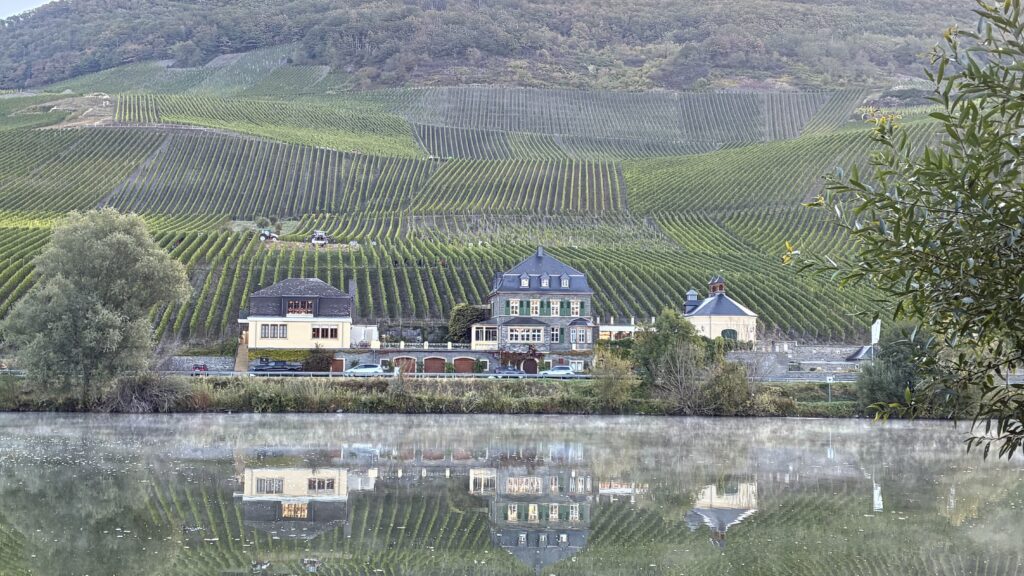
A demanding season, a rewarding harvest: Dr. Loosen’s 2026 vintage takes shape along the Mosel.
Drought defined the growing season at Dr. Loosen but the vines got off to a vigorous start. Flowering began in Erdener Prälat on May 19, beside its distinctive red slate cliffs. So many blossoms opened together that their scent was noticeable to anyone walking past. In some parcels, flowering was over in just 36 hours.
As the dry weather continued, the vineyard team had to adjust. Young vines needed targeted watering, while crop thinning reduced demands on the vines and helped them support the remaining fruit. Knowing where to intervene, and when, called for the team’s experience throughout the summer.
The estate’s earliest harvest since 1976 began on September 1 with Pinot Noir for rosé sparkling wine. Two days of steady rain the following week brought welcome relief to the vines, followed by sunshine and late-summer warmth.
In Ürzig, the Pinot Noir harvest showed how much attention goes into selecting and keeping track of the fruit. Pinot Noir is one of Erni Loosen’s personal passions, and the crew harvested separately by vineyard parcel and clone. Keeping those lots separate lets the cellar team assess what each contributes before making decisions about the finished wines. The estate takes the same care with its Rieslings, paying close attention to differences between parcels so each wine reflects where its grapes were grown.
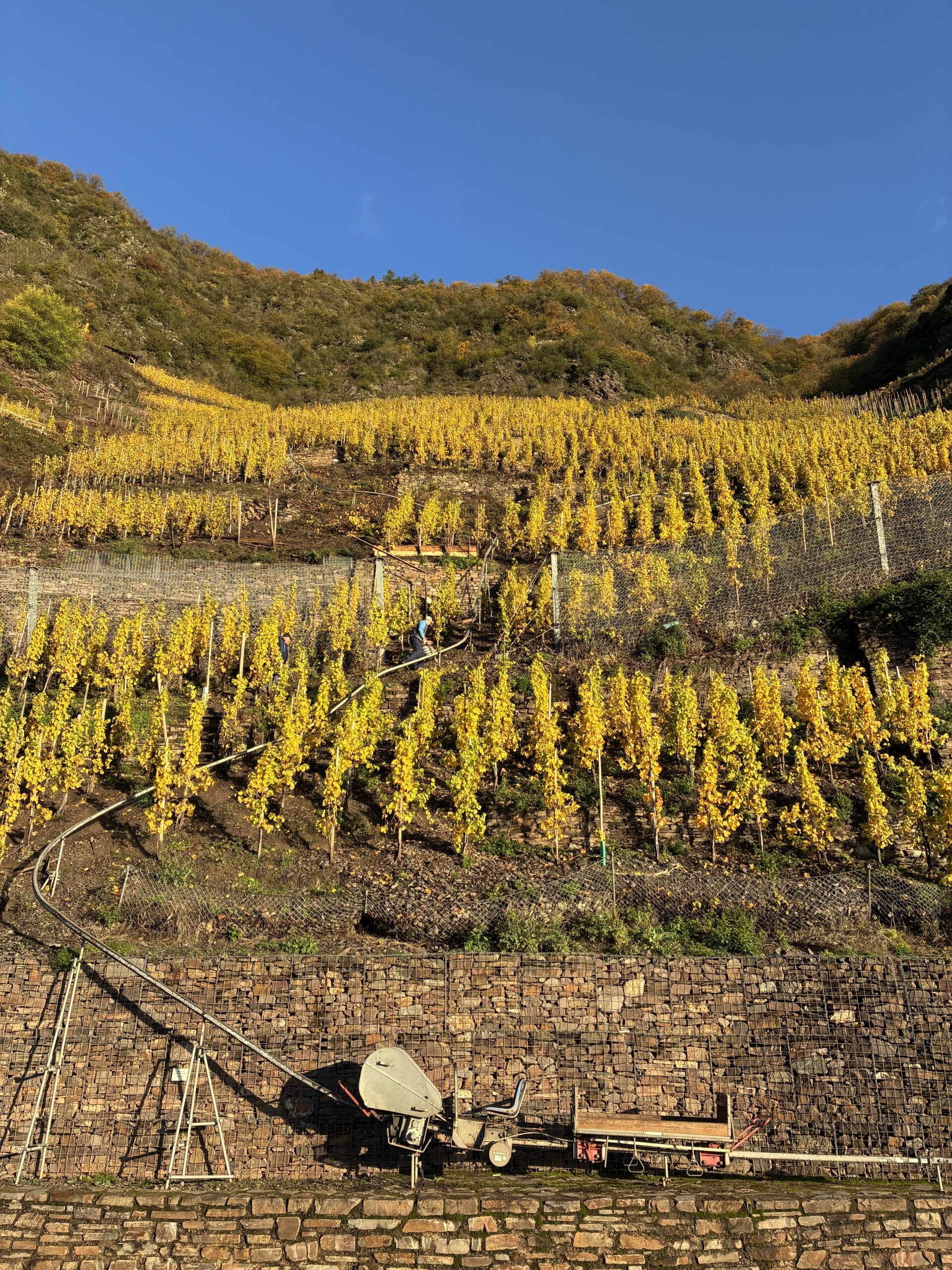
At Bremmer Calmont, the world’s steepest vineyard, getting the grapes into the cellar came with another challenge. Its dramatic slate slopes are served by a Monorack: a small, motorized railway that carries equipment and grapes where conventional vehicles cannot go. These railways save crews from hauling heavy loads up and down the Mosel’s steep vineyards. When the system broke down during harvest, the team finished the job carrying the remaining crates down by hand.
Harvest finished on October 7 in Erdener Treppchen with healthy Riesling grapes. After a demanding season, the quality of the fruit gave them plenty to celebrate – and plenty to look forward to as the young wines develop.
Mosel: Plenty of Reasons to Explore Riesling
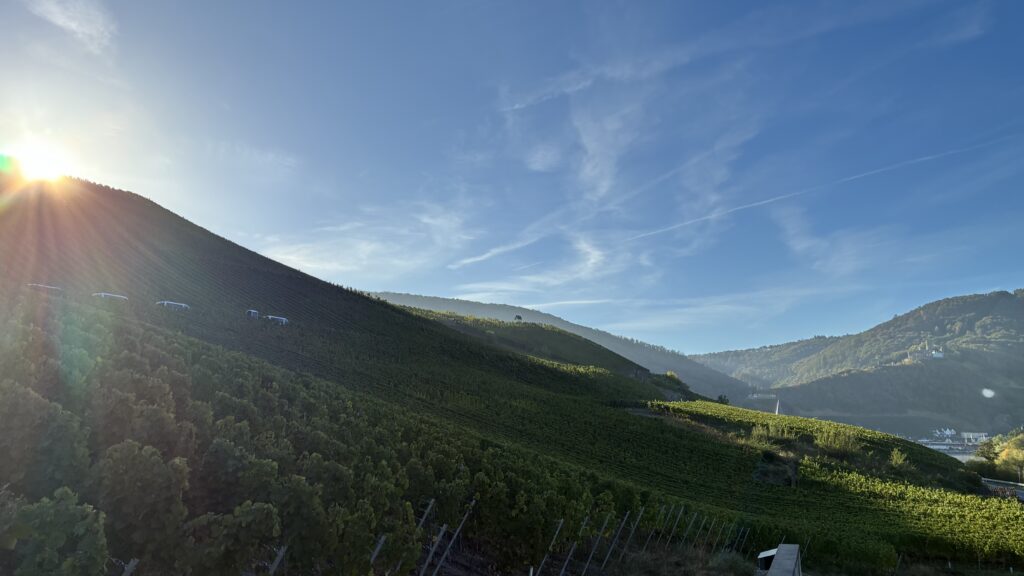
Sun Crests the Bernkasteler Lay Hillside in the Mosel
Across the wider Mosel region, including the Saar and Ruwer tributary valleys, generally smaller yields were matched by an encouraging range of wines. Dorothee Zilliken reports that vines remained well supplied with water despite the warmth, highlighting how experiences differed within the region.
“We were able to harvest the full spectrum,” she says, describing estate wines, top vineyard bottlings, and the noble sweet categories of Beerenauslese and Trockenbeerenauslese. Her outlook is enthusiastic: “This is undoubtedly a vintage that wine lovers can look forward to with great pleasure!”
That range matters when building a wine selection. Dr. Loosen and Fritz Haag on the Mosel, Zilliken in the Saar, and Maximin Grünhaus in the Ruwer offer different answers to an account’s needs. Their portfolios give buyers room to explore dry Riesling, fruity styles, and single-vineyard wines, depending on the customers and dishes they serve.
Rheingau: Getting to Know Robert Weil’s Dry Rieslings
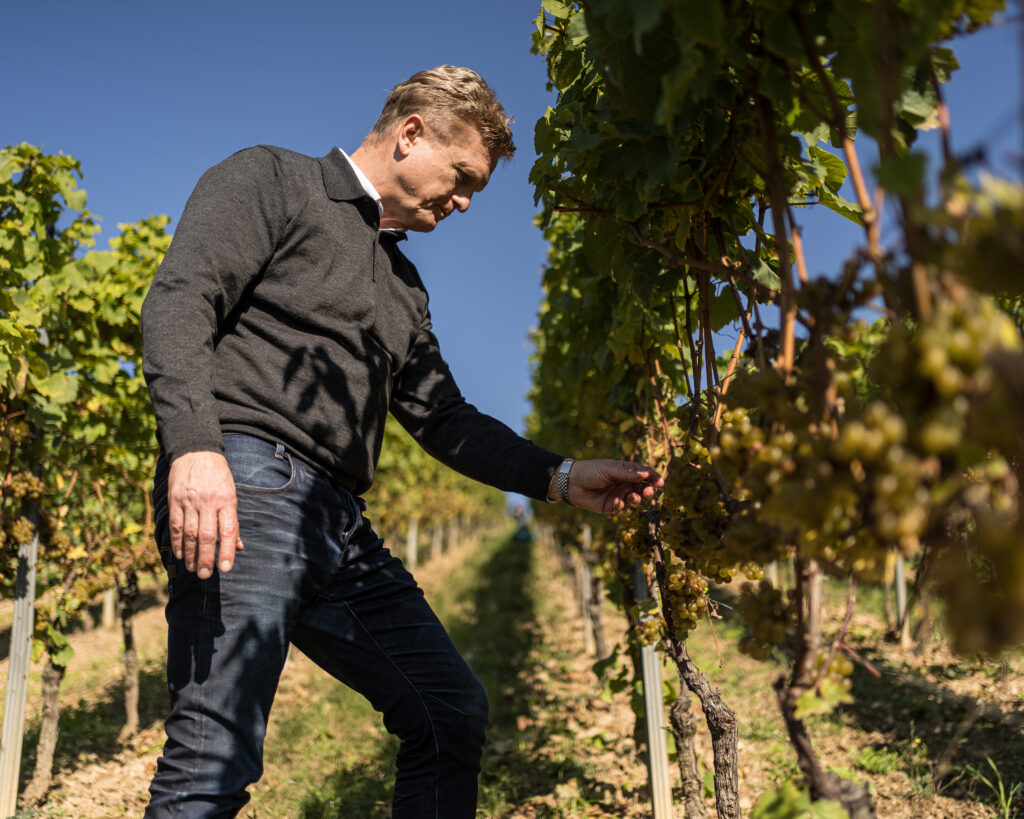
Wilhelm Weil Inspects the Vines
The Rheingau brought in ripe, concentrated grapes with stable acidity, a promising combination for wines built to age.
Robert Weil‘s range offers a useful way to explore the region’s dry Rieslings without treating them all as interchangeable. The Riesling Dry introduces the estate’s house style, with generous fruit and a rounded texture from large, neutral oak casks.
The Kiedrich Turmberg Riesling Trocken takes the focus to a single vineyard, classified as an Erste Lage, a premier cru site. Its stony soils produce a finely structured, elegant wine. Both bottlings are dry, but their origins and characters give buyers different reasons to choose them.
Rheinhessen: Two Ways into Wittmann
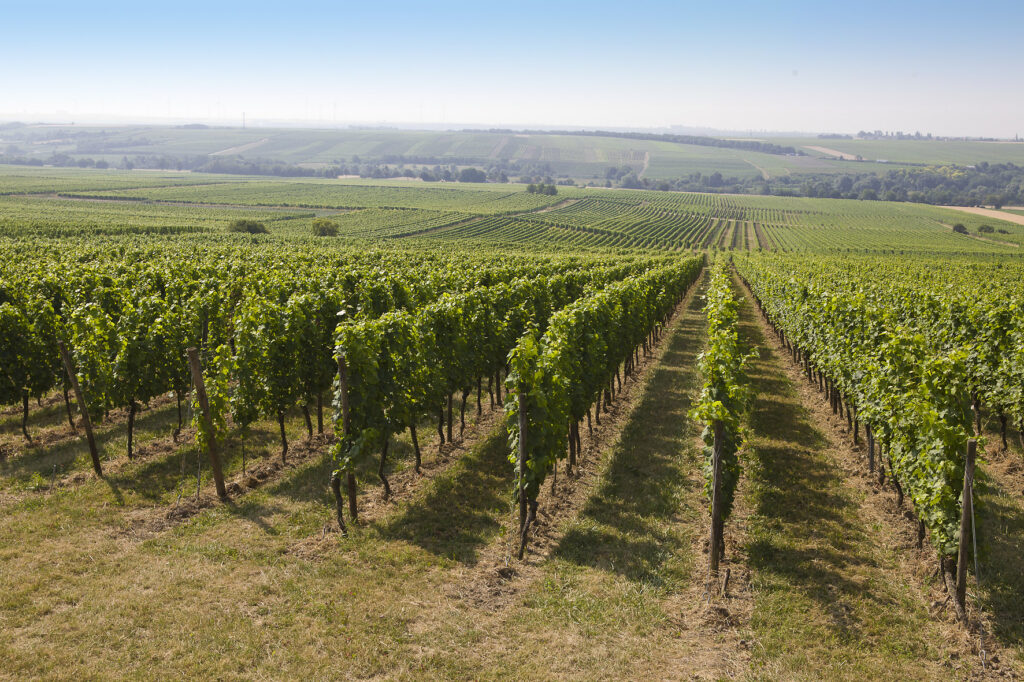
Wittmann’s dry Rieslings begin in Westhofen’s limestone vineyards, including Morstein.
Rheinhessen’s early harvest delivered healthy fruit with balanced ripeness and lively tension after a dry growing season.
At Wittmann, organic and biodynamic farming have long been part of the work in Westhofen’s limestone hills. The wines offer several ways to get acquainted with the producer, depending on what the account needs.
The organically grown 100 Hills Riesling puts fresh fruit and everyday enjoyment first. The Westhofener Riesling Trocken comes from parcels in the Morstein and Brunnenhäuschen grand cru vineyards, giving buyers a way to explore those sites without moving straight into an individual GG bottling.
Pfalz: A Good Year for Riesling and Pinot Noir
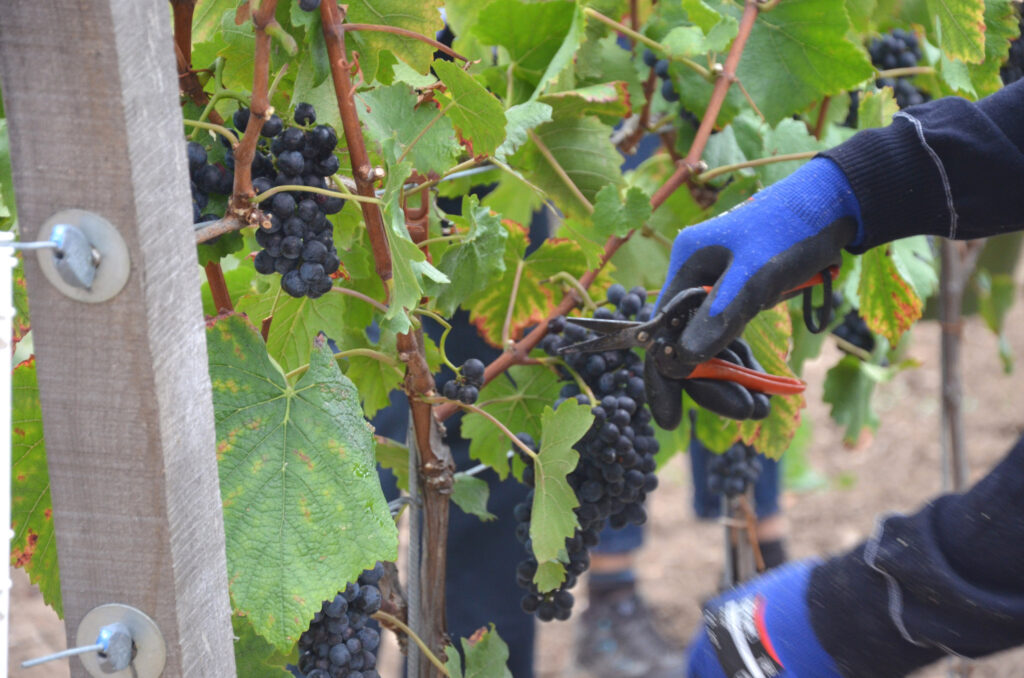
Picking Pinot Noir at Villa Wolf
In the Pfalz, abundant sunshine brought an early, fast harvest. Picking teams had to move quickly, but the fruit gave them good reason to be pleased: healthy grapes, excellent ripeness, and stable acidity, with positive results for Riesling and Pinot Noir.
Ripe flavor balanced by freshness is also a useful way to introduce Villa Wolf. Its Pinot varieties give customers a familiar grape to start with as they discover German wine. Pinot Gris offers a mouth-filling, dry white with fresh fruit and a crisp finish, while Pinot Noir brings ripe cherry flavors and spice to the table.
Bringing the Harvest to the Table
There is plenty to like in these first harvest reports, even with the fuller picture still taking shape in the cellar. At Dr. Loosen, the season shows what vineyard experience means in practice: managing the crop through drought, responding to timely rain, and making picking decisions parcel by parcel. The healthy fruit at harvest was a welcome reward for that work.
Those details can make a tasting more interesting. Pouring an estate dry Riesling beside a single-vineyard Riesling GG gives staff a chance to taste how the wines differ and a clearer idea of which bottle to recommend and when. The harvest story gives that comparison more context by showing how the vineyard conditions and growers’ decisions help shape the wines in the glass.
With holiday menus and shopping underway, there are plenty of chances to put that knowledge to use. A well-chosen Kabinett can become a favorite pairing, a dry Riesling can earn a regular place on a restaurant list, and a Pfalz Pinot Noir can send a customer home with something new for Thanksgiving. Each recommendation gives customers a chance to discover more of what Germany does well, starting with a bottle that fits their table.