Great wine doesn’t stand still. From the moment a wine is bottled, it continues to change. But aging isn’t simply a matter of keeping a bottle long enough. For a wine to develop gracefully, it needs the structure to carry it there.
Acidity is one of the most important pieces of that foundation, helping wine retain freshness as its flavors and aromas evolve. In red wines, tannin can provide additional structure, while concentration, balance and winemaking all play a role.
When those elements come together, time can transform a wine rather than simply make it older. Bright fruit becomes more nuanced, aromas grow more layered, tannins soften and the wine becomes increasingly integrated.
That doesn’t mean a mature wine is automatically better than a young one. They’re different experiences. A great wine can be compelling for its energy and immediacy in youth, then reveal an entirely different side of itself years, or even decades, later.
Few varieties demonstrate that evolution quite like Riesling.
Why Riesling Rewards Patience
-
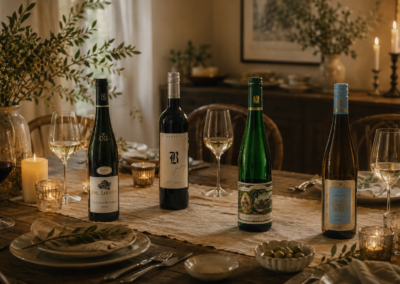
- 2022 Dr. Loosen Wehlener Sonnenuhr Riesling Kabinett – Youthful Energy that Will Continue to Develop
-
- 2020 Zilliken Estate Riesling – Vivid Acidity with Extraordinary Staying Power
-
- 2018 Appassionata Riesling GG – Aging is Part of the Winemaking
Riesling has a reputation for extraordinary longevity, and acidity is a big reason why.
Naturally high acidity gives the variety a strong backbone, helping preserve freshness even as the wine develops greater complexity. Depending on the wine, bright citrus, stone fruit, orchard fruit and floral aromas can evolve toward dried fruit, herbs, spice, honeyed notes and more savory characteristics.
In styles with residual sweetness, such as Kabinett, sweetness provides a counterpoint to that acidity, with the two becoming increasingly integrated over time. Dry Rieslings rely on acidity, concentration and structure to carry them forward.
But perhaps the most interesting thing about aging Riesling is that there isn’t a single point at which the wine suddenly becomes “ready.” Its character changes continuously. The bottles below capture three very different expressions of Riesling at different stages in that journey – from Germany to Oregon.
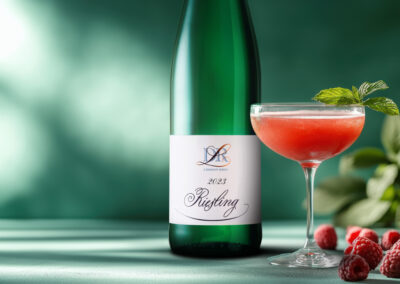
2022 Dr. Loosen Wehlener Sonnenuhr Riesling Kabinett
Wehlener Sonnenuhr is one of the Mosel’s most revered vineyards, a precipitously steep site where blue Devonian slate and old vines produce an especially elegant style of Riesling. The 2022 comes from Dr. Loosen vines averaging 60 years old, with pure peach and lemon fruit, delicate sweetness and lively acidity.
That balance gives Kabinett Riesling remarkable potential in the cellar, preserving freshness as the wine develops great aromatic complexity. At four years old, the 2022 still has much of its youthful energy, but also the foundation to continue developing for years to come.
2020 Zilliken Estate Riesling
Move from the Middle Mosel to the cooler Saar, and Riesling takes on a different personality.
Zilliken is known for delicate, nearly weightless Rieslings shaped by the Saar’s cool climate and slate soils. Its cellar approach is equally traditional, with fermentation, clarification, and maturation happening naturally in old Fuder casks. This gentle approach allows the freshness, precision and character developed in the vineyard to carry through to the wine in the bottle.
The 2020 Estate Riesling brings together gentle sweetness, vivid acidity and the lightness for which Saar Riesling is known. On release, it showed lemon balm, mint, chamomile, apricot and citrus alongside an earthy mineral character. With six years behind it, the wine demonstrates that ageability doesn’t always come packaged in power. Riesling can have extraordinary staying power while remaining remarkably light and precise.
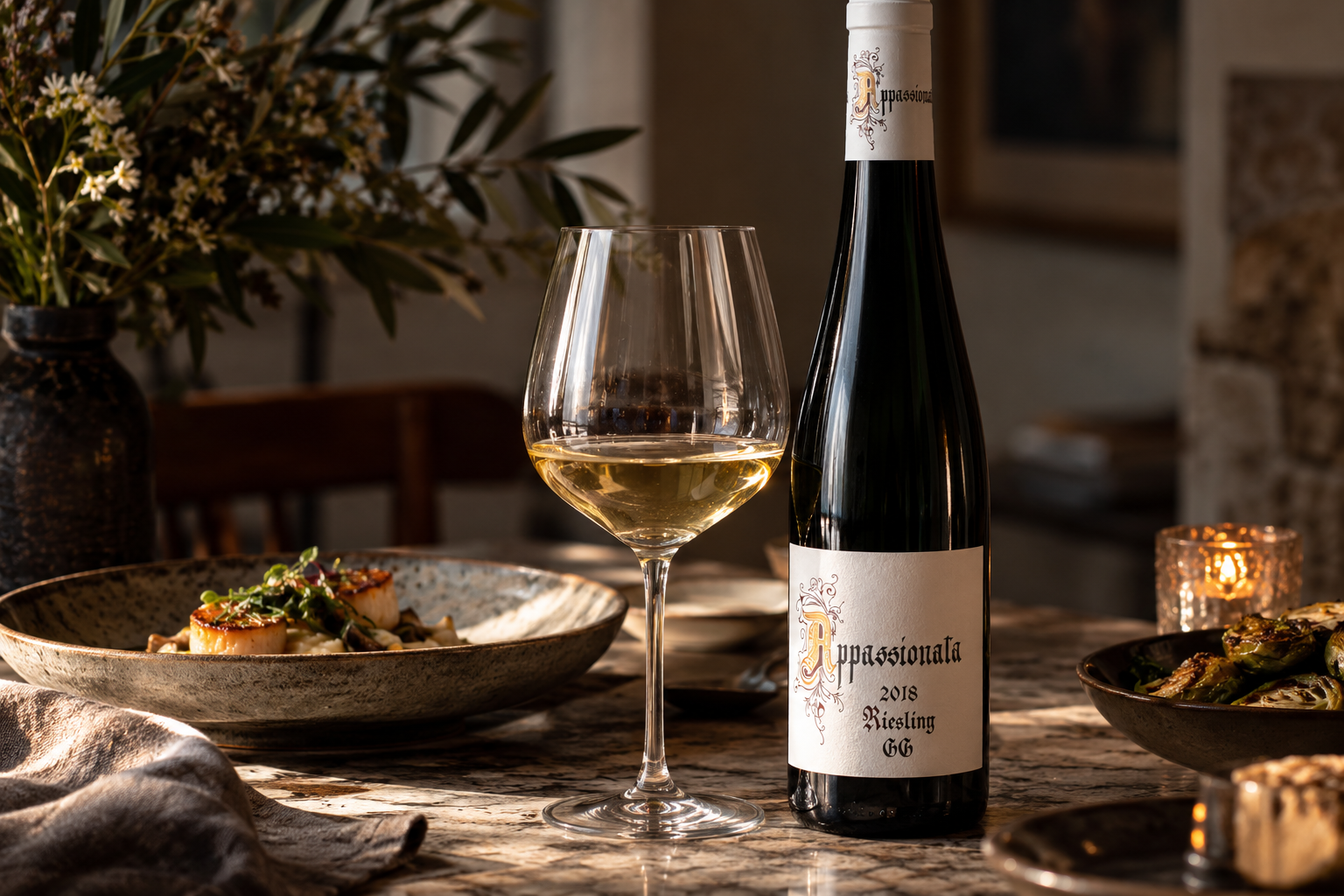
2018 Appassionata Riesling GG
Our first two wines show how Riesling’s natural structure can support long aging. Appassionata introduces another variable: what happens when the winemaker deliberately builds time into the wine from the beginning.
The 2018 Appassionata Riesling GG comes from old, ungrafted vines planted in 1976 at Medici Vineyard in the Chehalem Mountains AVA of Oregon’s Willamette Valley. After natural fermentation in a large neutral German oak cask, it spent two full years on its lees before bottling, followed by another three years developing in the bottle before release.
Extended lees contact allows the wine to develop texture and complexity while retaining freshness, and bottle maturation gives those elements additional time to integrate. At Appassionata, maturation is part of the winemaking process itself.
The result makes an important point about mature Riesling: freshness and development aren’t opposites. A wine with the right foundation can gain richness, texture and complexity without giving up the energy that made it compelling in the first place.
Riesling Isn’t Alone
-
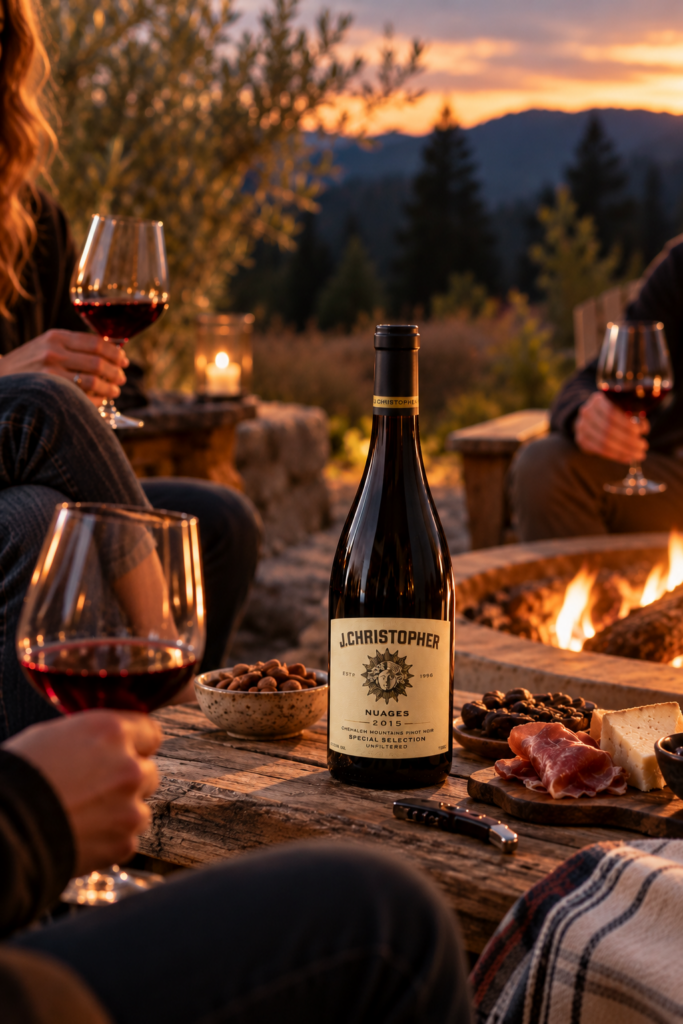
- 2015 J. Christopher Nuages Pinot Noir – Experience What Time Can Reveal
-
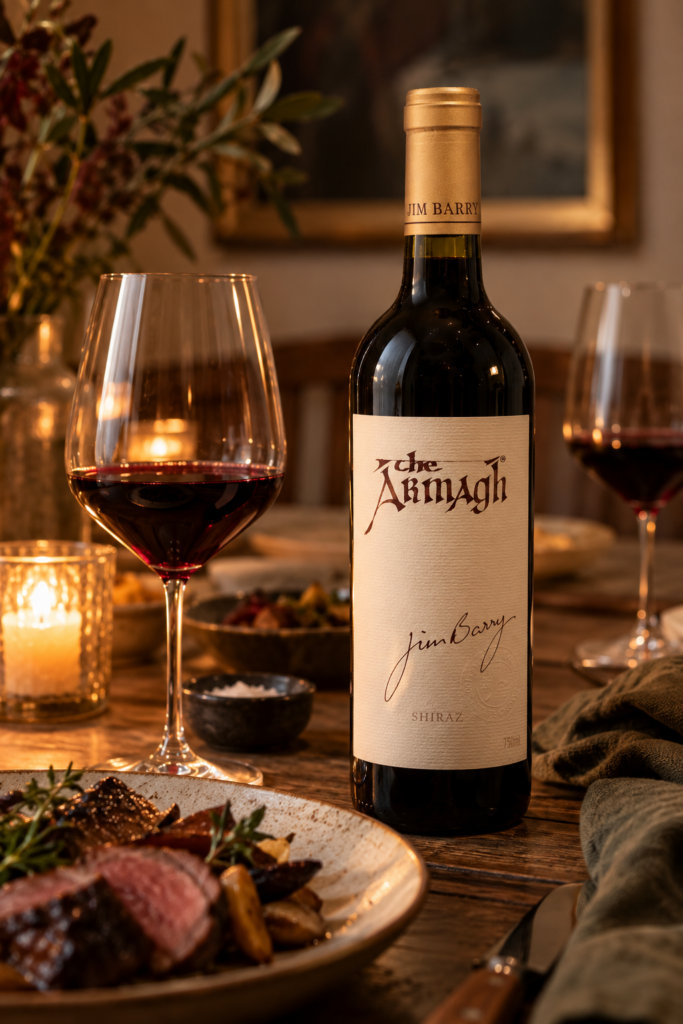
- 2017 Jim Barry Armagh Shiraz – Built to Develop Through the Ages
Riesling may make the case for aging especially clear, but the same basic principle applies across varieties: a wine needs balance and structure if it is going to evolve gracefully.
What provides that structure, and what happens to the wine over time, can look very different. In Pinot Noir, acidity and moderate tannin can carry delicate fruit toward increasingly savory, earthy complexity. In a structured Shiraz, concentration and tannin work alongside acidity as powerful fruit softens, integrates and develops new dimensions. Time doesn’t make every wine more alike; it reveals what each wine is capable of becoming.
2015 J. Christopher Nuages Pinot Noir
At more than a decade old, the 2015 J. Christopher Nuages Pinot Noir gives us the most mature Pinot Noir in our group – and a chance to see what longevity looks like in a variety prized more for finesse than sheer power.
Nuages is a special Chehalem Mountains cuvée selected from exceptional barrels. Despite an unusually warm 2015 growing season, the wine retained the purity, elegance and sense of place that define Nuages.
Aging isn’t a test of how powerful a wine is when it’s young. It’s a test of balance. More than a decade later, the appeal isn’t simply that this Pinot Noir has lasted. It’s the opportunity to experience what time can reveal in a wine built around elegance: less emphasis on youthful fruit, greater integration and the savory, earthy complexity that makes mature Pinot Noir so compelling.
2017 Jim Barry The Armagh Shiraz
Jim Barry planted the Armagh Vineyard in 1968 on a northwest-facing slope in Clare Valley. The site yields less than two tons per acre, producing concentrated fruit that has defined The Armagh since its first vintage in 1985.
The 2017 Jim Barry Armagh Shiraz was made with aging firmly in mind. Its concentrated fruit is supported by fine tannins and 18 months of maturation in French oak, creating the structure necessary for a long evolution in bottle. Jim Barry describes the wine as one “built to develop through the ages” and places its drinking window between 2021 and 2050.
That nearly three-decade window illustrates something important about age-worthy wine: maturity isn’t a finish line. At nine years old, the 2017 has already had meaningful time to integrate, but its evolution is far from complete.
So, When Is the Right Time to Open a Great Bottle?
Perhaps the most frustrating answer is also the most useful: it depends on what you want from it.
We often talk about a wine’s drinking window as though there is one perfect moment somewhere between too young and too old. In reality, great wines pass through different stages. In youth, fruit may be vivid and structure clearly defined. With age, those elements integrate; primary fruit becomes less dominant and new aromas and flavors emerge.
Each stage is compelling for a different reason. A mature bottle isn’t necessarily the better version of a young wine – it’s another version of it, one that couldn’t exist without time. That’s what makes older vintages, and especially tasting multiple vintages over time, so revealing. The goal isn’t to find one perfect moment, but to experience how the wine changes.
Drink it young for its fruit, energy and immediacy. Give it time and discover what maturity brings. Or revisit it along the way and experience both.
Because the real pleasure of an age-worthy wine isn’t waiting for the moment when it finally becomes “ready.” It’s discovering how many different things a great wine can become.